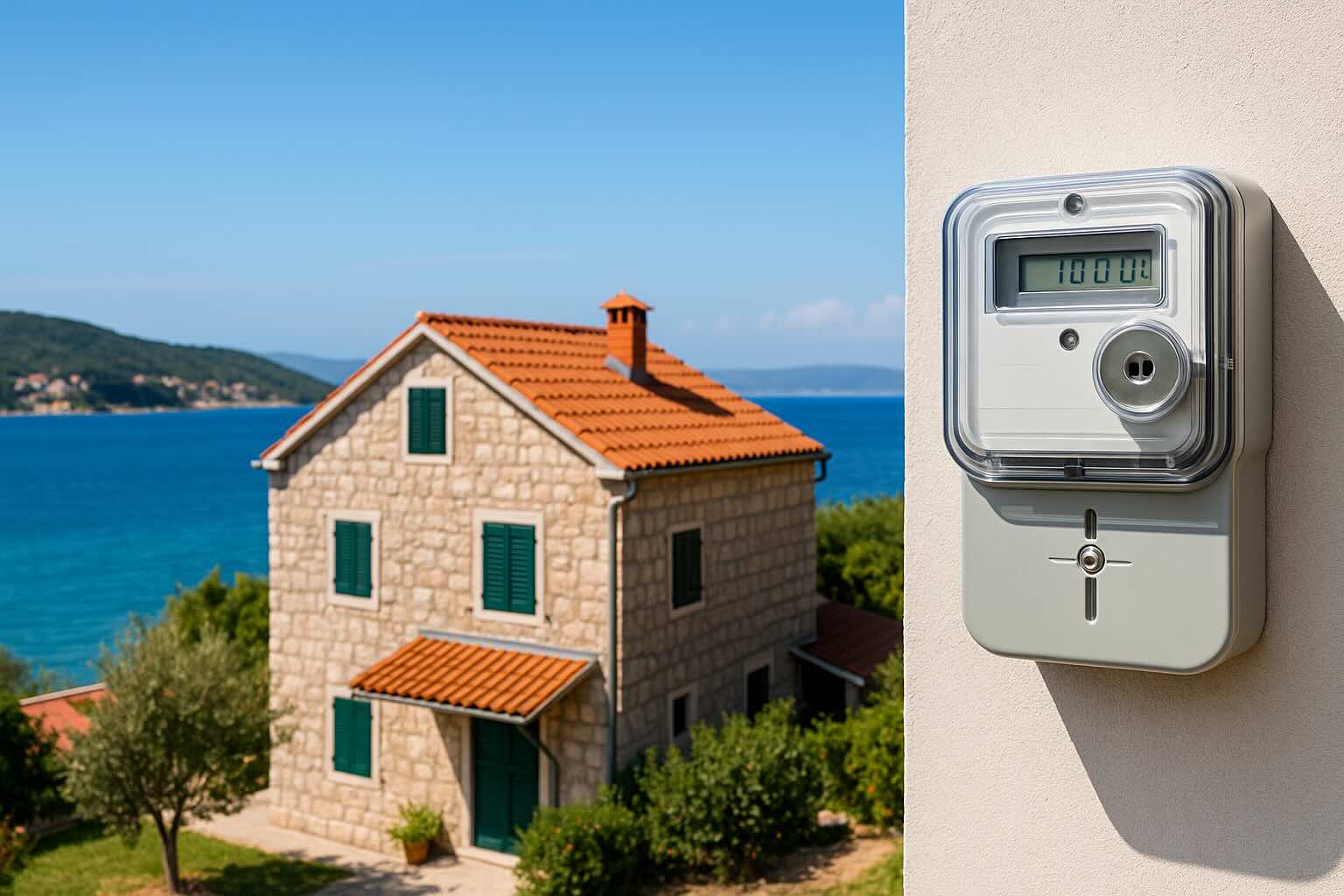
Electricity prices in Croatia have long been among the lower ones within the European Union, mainly due to state-regulated pricing and compensation mechanisms. This analysis is based on current HEP Elektra tariffs and an actual billing statement for the period from 18 February to 31 May 2025.
Structure of electricity pricing under the current tariff
For Croatian households, the key tariff model is “Kućanstvo plavi”, which includes the following main components:
- Energy supply (Opskrba): 0.079412 €/kWh
- Distribution (Distribucija – mrežarina): 0.032703 €/kWh
- Transmission (Prijenos): 0.013378 €/kWh
- Renewable energy contribution (Naknada za OiE): 0.013239 €/kWh
- Solidarity fee: 0.003982 €/kWh – currently compensated by the state
After including all components and the 13% VAT, the average household in 2025 pays approximately 0.14–0.16 €/kWh, depending on the tariff and actual consumption.
Regulation and state compensation
The Croatian government continues to regulate electricity prices through the decree Uredba o otklanjanju poremećaja na domaćem tržištu energije. This legislation sets a maximum price for household electricity, while the state covers the gap between the market price and the regulated price.
In the analysed model bill, a state compensation amount is listed, which directly reduces the final amount charged to the customer. The current regulation is valid until 30 September 2025, with the government announcing gradual adjustments rather than an immediate removal.
Price changes compared to 2024
The regulated energy price for households was 0.070276 €/kWh until 30 September 2024. From 1 October / 1 November 2024, it increased to 0.079412 €/kWh, representing a year-on-year increase of approximately 13%.
The regulatory authority HERA also adjusted network charges, adding roughly 3–4% to the final price. As a result, the total annual electricity costs for households increased by approximately 5–10%, depending on consumption patterns and tariff selection.
Why electricity advance payments change during the year in Croatia
Electricity advance payments in Croatia can change several times throughout the year. The main reasons include:
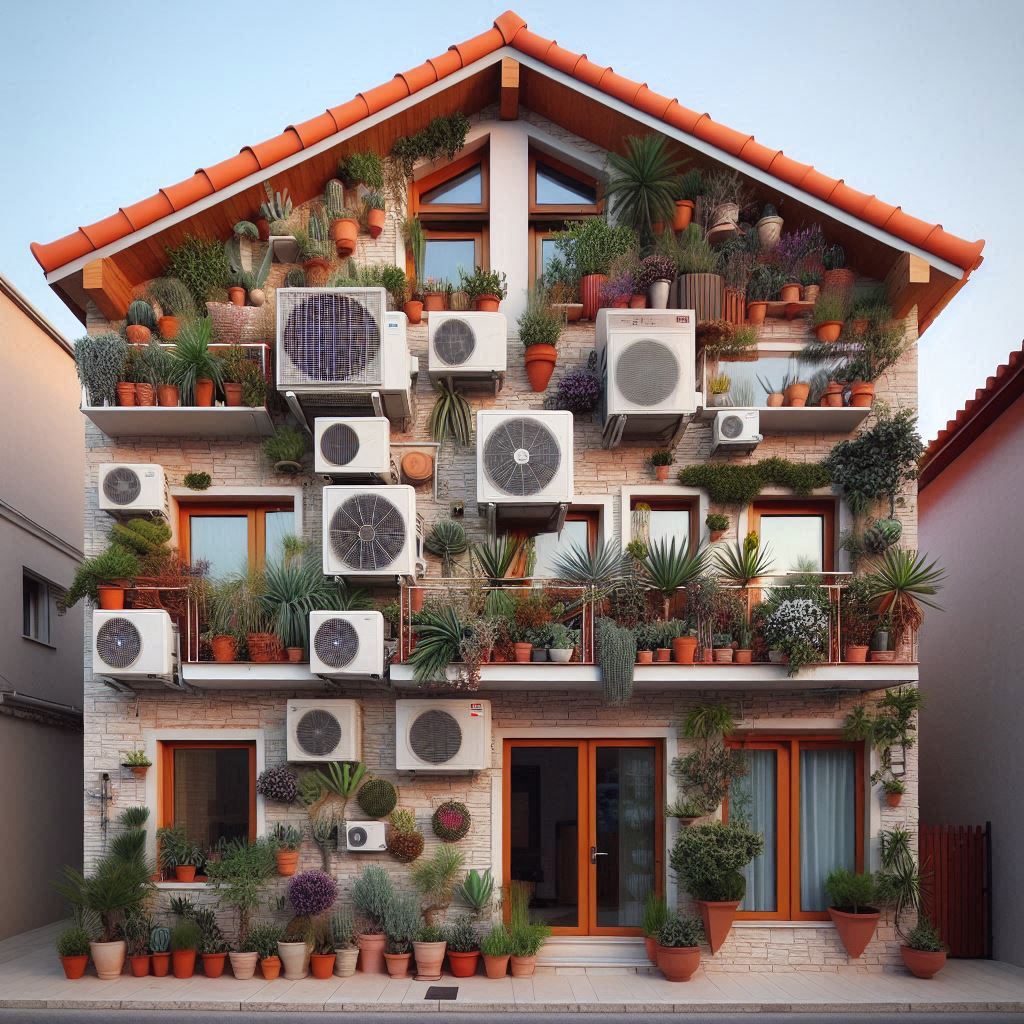
- Seasonal consumption: especially in coastal regions, electricity use rises significantly during the summer (air conditioning), prompting automatic recalculation of recommended advance payments.
- Ongoing adjustments of regulated prices: whenever tariffs, network fees, or state compensation levels change, HEP updates the advance payments accordingly.
- Annual settlement: after the issuance of the annual or seasonal consumption statement, advance payments are recalculated to reflect actual use during the previous period.
As a result, advance payments in Croatia do not reflect a simple yearly average but adjust dynamically to seasonal consumption patterns and the current regulated price levels.
Outlook after 30 September 2025
The government has announced that price regulation will continue, although in a gradually revised form. A moderate increase in end-user prices is expected towards the end of 2025 and early 2026. Nonetheless, prices are expected to remain below free-market levels thanks to ongoing subsidies.
Recommendations for property owners and holiday-home users
- For long-term stays or rental use, careful monitoring of electricity consumption is recommended — air conditioning can account for up to 50% of summer energy costs.
- For properties used primarily seasonally, a dual-tariff meter can often be advantageous.
- When renting out, transparent communication of energy costs to guests is advisable, as regulated prices can vary during the year.